
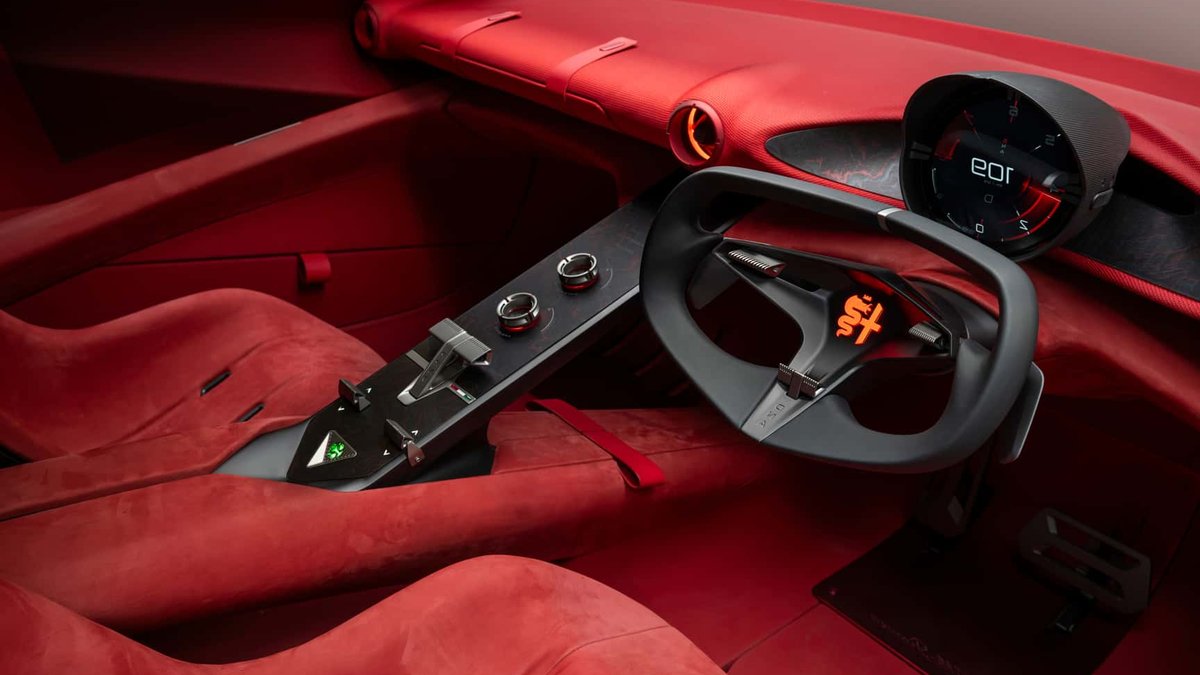
Alfa Romeo is pushing back against the trend of oversized displays in car interiors, with the company’s design boss arguing that they are dictating dashboard design rather than serving the driver’s needs. Alejandro Mesonero-Romanos, speaking with Autocar, said “Let’s get rid of the screens,” as they are increasingly dictating dashboard design rather than serving the driver’s needs. Mesonero-Romanos has a point, as screens have indeed killed creativity in dashboard design, with cars now built around them rather than the driver. This trend mirrors what happened with smartphones, where devices became increasingly similar as they were designed around touchscreens. The industry’s approach to installing increasingly large displays does not make sense, according to Mesonero-Romanos.
He described the “war of centimetres” as automakers compete to install increasingly large displays, noting that the mine’s-bigger-than-yours race doesn’t make much sense because screens eventually become outdated, potentially turning into expensive liabilities as technology moves on. Alfa Romeo’s Cuorerosso concept, unveiled at the Paris Motor Show, offers a glimpse of what the company’s philosophy could mean for future interiors.
The concept features a cleaner design with technology that can effectively fade into the background, rather than filling the dashboard with digital real estate. One standout feature is a fresh take on the brand’s traditional cannocchiale instrument cluster, which uses two round displays that can merge into a single unit. Mesonero-Romanos wants to have an infotainment screen but not have it on all the time, so he wants to hide it.
Read Also: Honda to Sell Mitsubishi Pickup Truck in 2028
The designer acknowledges that large screens remain popular across the industry, but he believes those who buy an Alfa Romeo want something different. The company hopes there’s a sizable audience that would rather have a cabin designed around driving than one that resembles a rolling tablet. The Cuorerosso’s interior pairs digital technology with conventional controls, including physical buttons, dials, and switches for frequently used functions. At the center of the cabin, a console integrates a discreet digital display into a surface designed around physical controls. Secondary information, such as the currently playing song or navigation instructions, can appear when needed and disappear when it isn’t.
Whether the Cuorerosso’s vision will translate directly into production cars remains to be seen, as it is a concept and not a confirmed preview of a specific model. Nevertheless, the message is clear: the company wants to stand apart in an industry where many dashboards are starting to look remarkably similar. Alfa Romeo hasn’t gone gaga over giant screens like so many other automakers, resisting the temptation to turn every dashboard into a glorified tablet.
In an industry where bigger displays have become a selling point, Alfa Romeo seems to understand that good interior design isn’t about screen size but about how everything works together. As Mesonero-Romanos said, it’s time to rethink the role of screens in car interiors and focus on designing cars that are built around the driver, not the screen.


Leave a Reply