
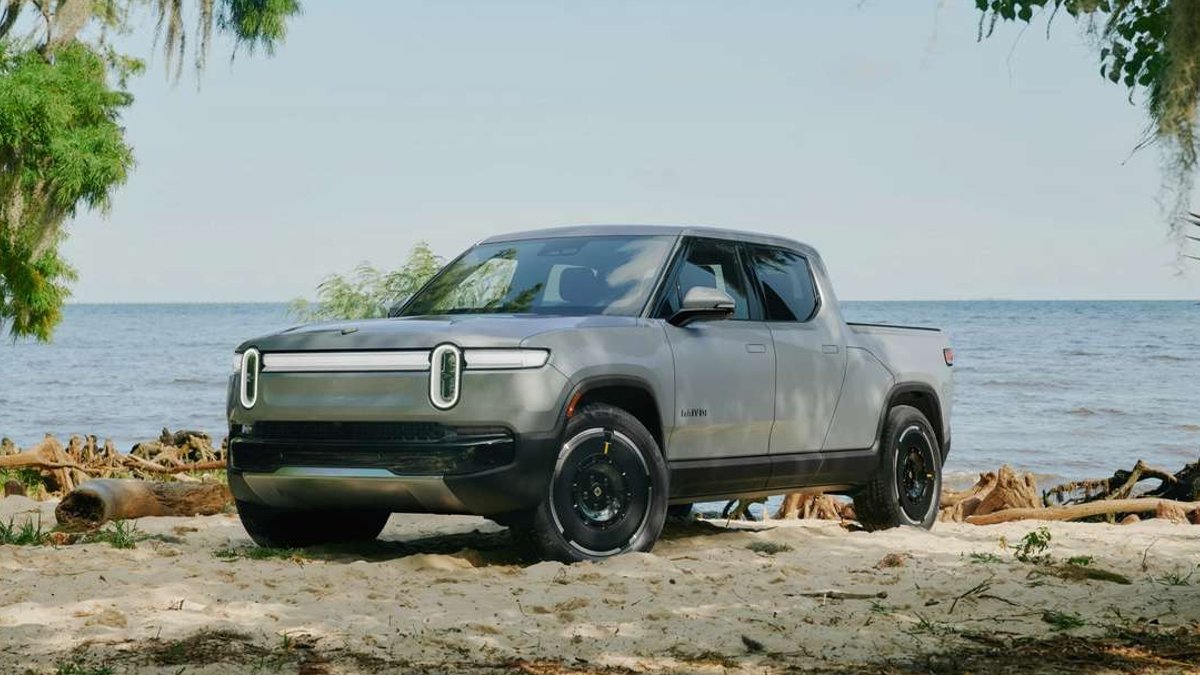
In central Washington, a driver’s recently acquired used 2023 Rivian R1T became inoperable just under two weeks after purchase, prompting a 150-mile journey to a Rivian service center.
Hardware Failure Leaves Truck Inoperable
Reddit user Dwain_Jonsun said he bought the Quad-Motor R1T through Rivian’s pre-owned program in Portland on September 10. The truck had just under 8,000 miles. By September 22, according to his post, it would not unlock, the exterior door handles would not present, and the truck appeared to have no usable power.
He contacted Rivian support. The company attempted a remote unlock by text message and then directed him to try the emergency frunk-release procedure, including repeated presses of the release button. Neither attempt restored access.
The R1T was eventually transported to Rivian’s service center in Fife, Washington. The owner estimated the trip at about 150 miles from his location. Then another number appeared in the Rivian app: $1,700 for towing.
That number is the most eye-catching part of the story, but it is also the part that needs the most care. In a later comment, the owner said he had not yet spoken again with the service team and that the app had changed what he initially saw as an estimate into an invoice. He also said he hoped the situation would be resolved at a lower cost.
“I like the truck. I hope the service team’s assessment of my truck not needing any recall work taken care of while they had it conveniently at the service center) was based on something rather than a guess. I really hope the tow truck winch-n-drag didn’t cause any damage. Perhaps there will be a recall that fixes the inability to open the doors when the battery is dead. Hopefully I don’t have to pay another $1700 for a tow, but I am not optimistic.”
In other words, $1,700 is what the owner says appeared in the app for the tow. It is not yet established as the amount he will ultimately have to pay.
Costs and Coverage Remain Unclear
Rivian’s current U.S. Roadside Assistance Terms make the diagnosis central to what happens next. The company says that when a Rivian is inoperable because of a warranty-related issue, emergency towing is provided at no cost to the owner. Rivian also says owners may be responsible for towing when the underlying issue is not covered by warranty.
Rivian’s Service Terms add another important condition. They say the customer is generally responsible for towing unless the tow directly results from a warranty-covered repair and was arranged through Rivian Service Support for Roadside Assistance. For an inbound tow, Rivian says coverage applies when a warranty repair makes the vehicle unsafe or unable to drive.
That means the displayed towing amount and the final customer responsibility can be two different things. Until Rivian diagnoses the truck and decides whether the repair qualifies for warranty coverage, the owner cannot know from the app alone whether the $1,700 remains his responsibility.
The fact that this was a Rivian pre-owned vehicle matters, but it does not settle the question by itself. Rivian says every vehicle sold through its pre-owned program must pass a 137-point safety and quality inspection. The company also says a pre-owned Rivian receives the remainder of its original New Vehicle Limited Warranty rather than a new warranty period beginning on the resale date.
Rivian advertises a seven-day or 500-mile return period for pre-owned vehicles, whichever comes first. Based on the dates in the owner’s account, this failure happened after the seven-day period had passed. His exact mileage since purchase was not stated.
Proper Loading Matters for Warranty Claims
Rivian’s Tow Operator Guide shows that winching a disabled R1T onto a flatbed can be part of the correct procedure. The important issue is what happens at the wheels when the electronic park brake cannot be released.
For a vehicle with a dead battery or a park brake that cannot be released electronically, Rivian instructs tow operators to lift the rear wheels before loading. The guide says operators can use skates, a dolly, or the tow truck’s wheel lift. If skates are used, Rivian says they should remain under the wheels all the way up the ramp.
Once the rear wheels are lifted or the parking brake is released, Rivian’s guide directs the operator to use the winch to pull the vehicle onto the flatbed at no more than 5 mph.
That distinction matters because describing the truck as being “dragged” or winched onto a flatbed does not, by itself, prove that the tow was performed incorrectly. The unanswered question is whether the tow operator followed Rivian’s prescribed wheel-lift or skate procedure if the park brake could not be released.
The owner‘s post does not provide enough detail to answer that.
The Cause Remains Undiagnosed
The symptoms naturally invite speculation about the R1T’s 12-volt electrical system. Rivian’s Tow Operator Guide lists several signs associated with a low 12-volt battery, including doors or storage compartments that will not unlock, no response from the key fob, and no vehicle lights or displays. Those symptoms overlap with parts of this owner’s account.
A disabled R1T can have more than one possible cause, and the owner had not posted a Rivian service diagnosis when this story was written.
There is also a warranty detail that makes the exact cause important. Rivian’s U.S. New Vehicle Limited Warranty Guide says original-equipment 12-volt batteries are covered for three years or 36,000 miles, whichever comes first, subject to the warranty’s terms and exclusions.
The truck’s reported mileage is far below 36,000 miles, but mileage is only half of that limit. A 2023 model could be inside or outside the three-year period depending on its original in-service date. That date was not established in the owner’s post.
And if the failed component is something other than the 12-volt battery, a different warranty provision may apply.
The useful conclusion right now is not that a particular battery failed. It is that a nearly new-to-him R1T became fully unusable, the cause remains unresolved, and the eventual diagnosis will determine both the repair story and whether the large displayed tow amount becomes an actual out-of-pocket expense.


Leave a Reply