
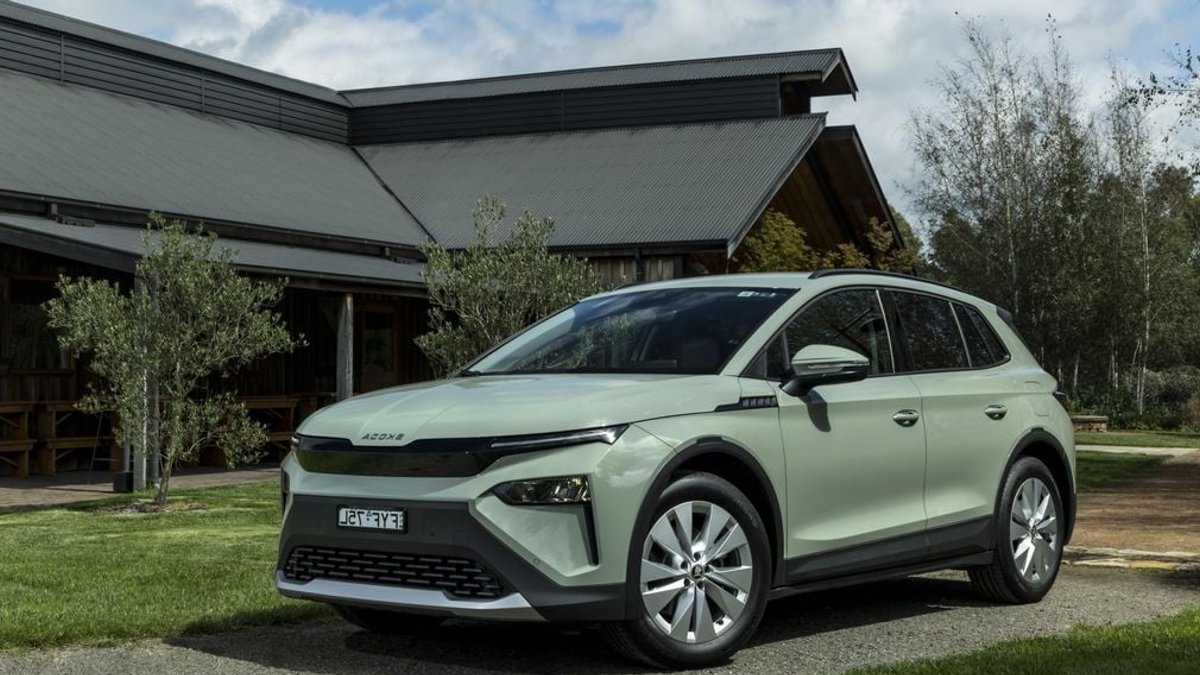
Skoda Australia says its expanding lineup of electric vehicles will let it keep selling petrol-powered cars without raising prices to cover penalties under new emissions rules.
EV sales growth offsets petrol models
The Czech automaker currently sells two battery-electric SUVs in Australia—the Enyaq and Elroq. Together, they accounted for about 700 sales in the first half of 2026. That number is expected to climb to 1,300 in the second half of the year and reach 2,500 in 2027.
Two more models—the Epiq small SUV and Peaq large SUV—are set to arrive by early 2028. Skoda says the growing EV mix will give it enough emissions credits to keep offering combustion models like the Kodiaq and Kamiq without passing costs to buyers.
“We all know what’s happening with the New Vehicle Efficiency Standard (NVES)—the fines and penalties are outrageously high, and we need to manage that,” said Kieran Merrigan, Skoda Australia’s head of marketing and product. “The good thing for us bringing in additional technologies that actually help us comply is it means we can continue to bring in ICE cars, and we know customers are still demanding them.”
Related: Cupra Terramar VZ Tribe Edition Adds Sustainable Style
Merrigan said the strategy allows Skoda to avoid price increases while meeting emissions targets. “By having a good mix of BEVs, it allows us to continue offering ICE cars without customers having to pay the penalties for us.”
Early compliance gives Skoda breathing room
The NVES, introduced last year, requires automakers to meet fleet-wide emissions targets or face fines. Brands that exceed targets earn credits, while those that fall short accumulate liabilities. Skoda finished the first reporting period with 86,888 credits and no liabilities.
That early compliance puts Skoda in a stronger position than many rivals. Mazda, for example, racked up 508,517 liabilities—the highest of any automaker—while Nissan came in second with 215,261. Other brands missing their targets included Ford, Hyundai, Porsche, and Subaru.
Ford Australia already cited NVES as the reason for a $5,000 price increase across its Mustang lineup in mid-2025, with another $1,000 added this year. It’s unclear whether Mazda or others will follow suit, or if they’ll instead buy credits from brands like Skoda that have a surplus.
Related: Ferrari’s 2027 Luce wows in early test drive
For now, Skoda’s approach hinges on scaling EV sales fast enough to offset its petrol models. The automaker says its strategy is working, with no penalties expected in the near term. But the real test will come as the NVES targets tighten and competitors scramble to adjust.
Most buyers still prefer petrol or hybrid cars, even as EV adoption grows. Skoda’s bet is that it can serve both markets without alienating either—keeping prices stable while avoiding the fines that could force rivals to rethink their lineups.
If the plan holds, the company might not just avoid penalties. It could also gain an edge over brands forced to drop popular models or raise prices to stay compliant.


Leave a Reply