
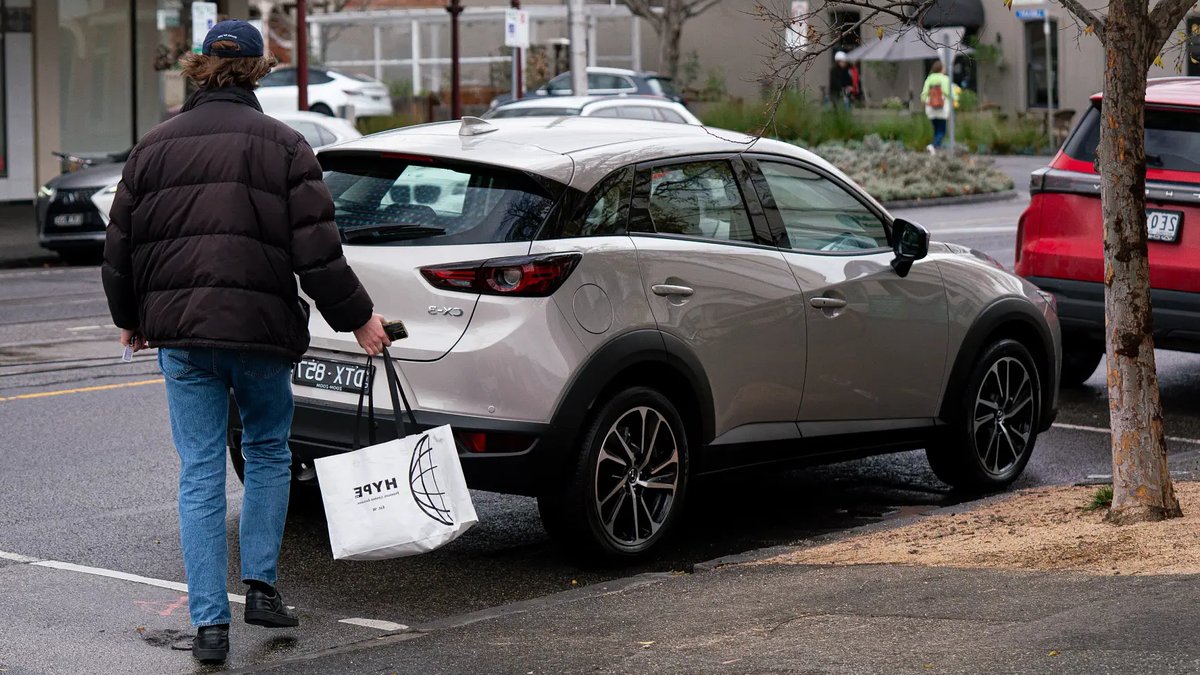
At 11 years old, the Mazda CX-3 faces a difficult question in 2026: is an ageing light SUV still competitive against the fresher rivals flooding the market? Mazda has tweaked and updated the vehicle, but the CX-3 remains fundamentally underpinned by a platform and powertrain dating back more than a decade. This structural age highlights the contrast between the CX-3’s strengths in build quality and driver engagement and its weaknesses in technology and efficiency.
Value and equipment
The test vehicle is the Evolve trim, priced at $32,400 before on-road costs. For a light SUV, this sits on the expensive side of the scale. Competitors like the Hyundai Venue Elite and the Mahindra XUV 3XO AX7L undercut the Mazda significantly, offering more for less. Even one-size-up small SUVs from China with advanced electrified powertrains, such as the BYD Atto 2 and Chery Tiggo 4 hybrid, are positioned close to the CX-3 Evolve price point.
At this price, buyers receive 18-inch alloy wheels, keyless entry, and LED headlights. The equipment list also includes a suite of safety systems: autonomous emergency braking, a reversing camera, rear parking sensors, a head-up display, blind-spot monitoring, and rear cross-traffic alert. The synthetic leather interior is a standout feature, offering a premium look and feel that many rivals struggle to match. However, the value equation is difficult to justify when competitors provide more features for less money.
While the CX-3’s build quality is impressive—free from squeaks and rattles—the safety systems work well without false positives—the infotainment system is a notable exception. The 8.0-inch screen uses the older rotary control dial interface, which feels cumbersome compared to modern touchscreens. The system lacks native satellite navigation in some iterations, and the Bluetooth connection can take over 60 seconds. The screen resolution is low, and the chunky bezels detract from the overall experience, even with wireless Apple CarPlay and wired Android Auto support.
Interior space and driving feel
Despite its “SUV” badge, the CX-3 is better viewed as a higher-riding Mazda 2. The rear seats feel cramped for adults, and the 264-litre boot offers just enough space for daily items. This makes the car suitable for first-time owners, young couples, and empty-nesters, but less practical for larger families.
On the road, the CX-3 delivers a confident driving experience. The ergonomics are well-designed, with adjustable seats and a steering wheel that provide a comfortable position. The throttle, brakes, and steering offer good feedback, allowing drivers to feel in control. The six-speed automatic transmission is smooth and compliant. However, the 2.0-litre four-cylinder engine, producing 110kW and 195Nm, feels sluggish compared to modern hybrid and electric alternatives. High revs also bring noticeable engine noise. The suspension handles bumps reasonably well but can transmit harshness through the cabin due to the 18-inch wheels.
Even with these criticisms, the CX-3 maintains a competitive edge in road manners and dealer service, but the market has shifted. More advanced, better equipped, and more efficient models are available for less. Buyers looking for a Mazda might find better value in a larger, newer model like the Mazda 3 Evolve, but the CX-3 remains a capable city commuter for those who prioritize the driving experience over the latest technology.
Efficiency and alternatives
The fuel economy figures show room for improvement. The official consumption rate stands at 6.3 litres per 100 kilometres. The tester recorded 7.2L/100km, which is close to the claimed city average of 7.7L/100km. This indicates that the engine requires effort during urban driving. High revs also produce noticeable noise, which can become fatiguing over time.
Other small SUVs offer more value. The Mahindra XUV 3XO AX7L starts at $26,990 drive-away. The Hyundai Venue Elite costs $30,500 plus on-roads. Chinese models like the Chery Tiggo 4 hybrid and GWM Haval Jolion hybrid also undercut the Mazda. These rivals provide advanced technology and better fuel economy for less money.
Conclusion
The CX-3 is not a bad car in isolation. The build quality is high, and the cabin is quiet. The road manners are engaging, with good feedback from the controls. However, the value proposition is weak. The equipment list does not justify the price tag. The engine is underpowered, and the infotainment system is outdated.
Mazda dealers provide strong service, but this is not enough to save the model. Buyers should consider the Mazda 3 Evolve at $33,410. It offers more space and a newer platform. Alternatively, competitors provide better technology and efficiency for less. The CX-3 serves as a competent city commuter, but the market has moved on. The CX-3 has fallen behind the competition.


Leave a Reply