
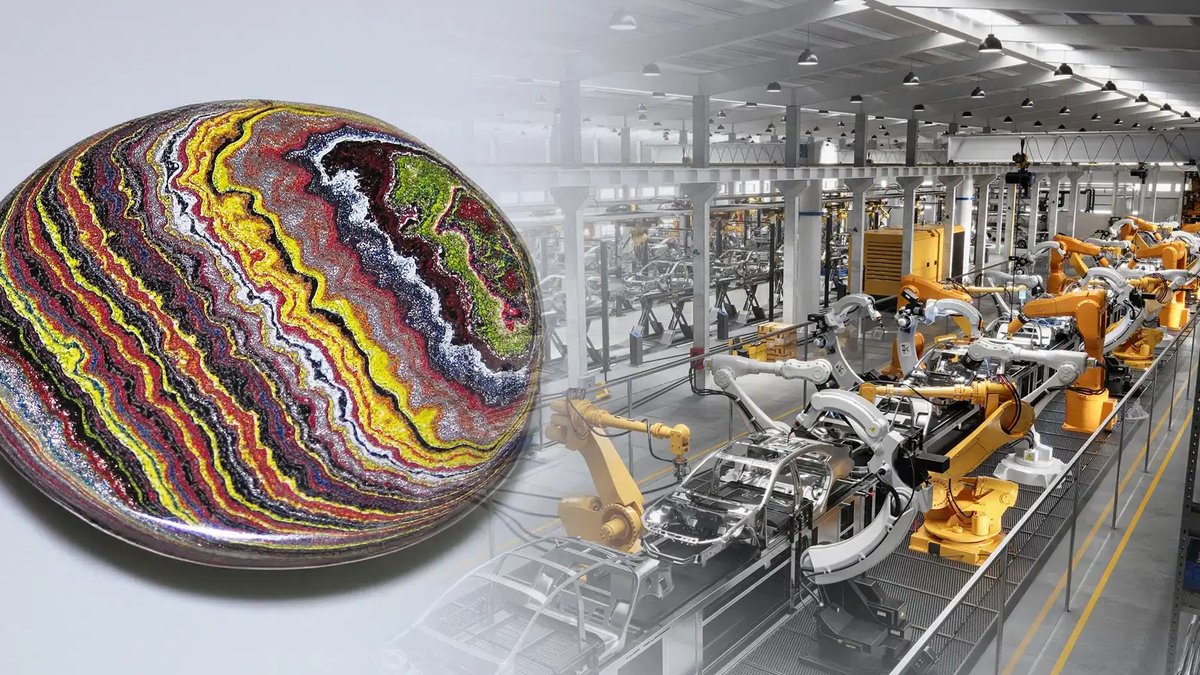
Fordite, a multicolored stone formed from decades of paint overspray in automotive factories, began appearing on production lines during the 1930s and 1940s at Ford plants in Detroit. Workers noticed thick layers of enamel paint building up on racks and stands where cars were coated, creating a hard, layered material that lapidaries later learned to cut and polish into jewelry. It is also known by alternate names such as Detroit agate, Motor City agate, or simply paint slag, reflecting its origins in the industrial heartland of North America.
Paint Layers Tell Car History
Each layer of fordite represents a different car color applied over time, similar to tree rings revealing growth history. Older enamel paints contained lead and required heat-baking between coats, which helped the material harden into dense chunks. Rare colors from limited production runs make some pieces especially valuable to collectors.
The paint process involved spraying one color, baking it, then moving to the next vehicle with a different shade. Overspray accumulated in the same environment, gradually building up over years. While automotive brands did not officially sell these pieces to the public, it is widely believed that workers smuggled fragments out of factories once they realized the material could be crafted into jewelry.
Rarity Increases With Modern Paint
Car manufacturers switched from enamel to acrylic urethane paint in the 1990s, largely eliminating the conditions that created fordite. The new paint could be applied electrostatically, charging the paint so it clung to vehicles without excessive overspray. This efficiency reduced waste but also made fordite much harder to find.
Lead paint regulations in some U.S. states also restrict the sale of older fordite pieces. However, modern assembly lines that still use traditional painting methods continue producing small amounts of the material, particularly in panel repair shops. Overspray still occurs in some car painting assembly lines, especially where electrostatic equipment is not used.
Collecting Fordite Today
Some companies now source contemporary fordite from active production lines. Keycap Quarry, for example, obtains material from garbage truck, Jeep, Kenworth, Ford, and Chevrolet facilities to create custom keycaps. These modern pieces avoid the lead content issues of older specimens while maintaining the same layered appearance.
Authentic fordite commands prices comparable to natural gemstones. Cut and polished pieces from the 1970s sell for around $150 for seven grams, matching the cost of citrine and lower-grade brown sapphire. The market includes both genuine factory-collected material and suspected homemade reproductions, with some companies allegedly falsifying the gemstones by producing them at home. Are you just paying for layered paint, or are you paying for the story behind it?


Leave a Reply