
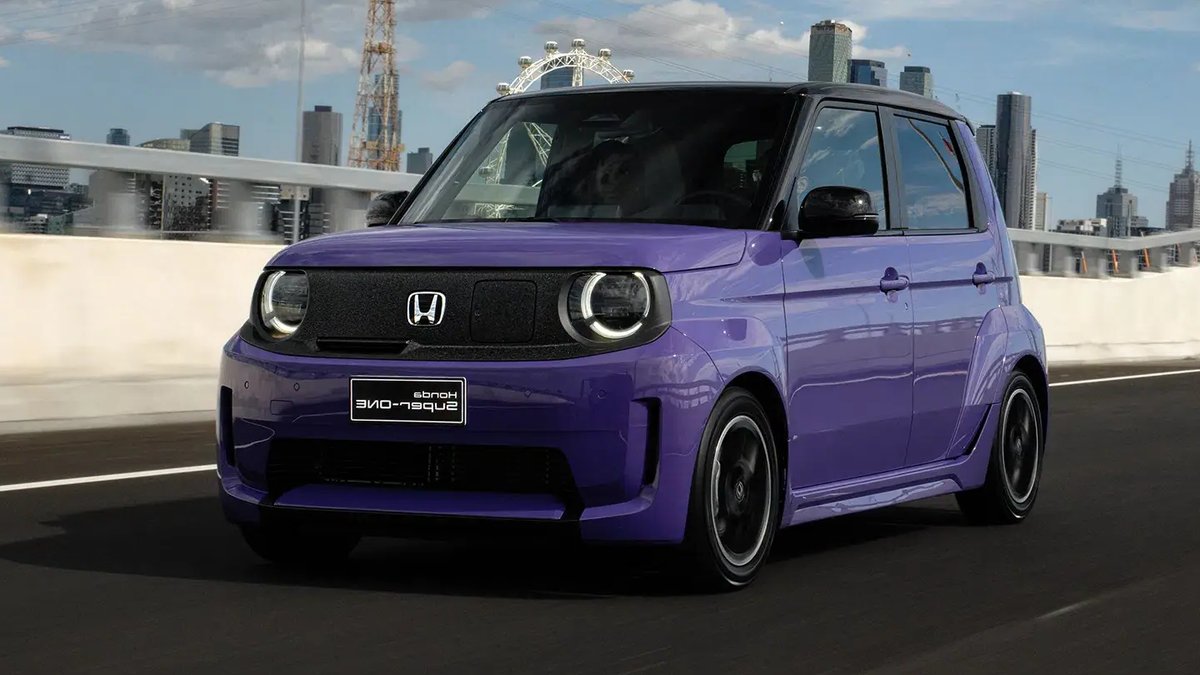
Honda’s 2027 Super-One presents an electric vehicle that challenges conventional expectations. Priced at $36,900 drive-away, it offers a 202km range, shorter than any other electric vehicle currently on sale, and omits features like blind-spot monitoring and rear cross-traffic alerts. Despite these limitations, 7,000 Australians registered interest before the first test drive, and the initial allocation of 130 cars for 2026 sold out within hours of pre-orders opening. Deliveries have already commenced, with a waitlist extending into 2027. The Boost Violet Pearl trim remains the fastest-selling option.
Standard Kei cars are limited to 3,400mm in length, 1,480mm in width, and 47kW of power. The Super-One exceeds two of these limits—it measures 182mm longer and 93mm wider—while maintaining the 47kW output baseline. A Boost button temporarily increases power to 70kW, a capability no other Kei-based electric vehicle offers.
This design creates a vehicle weighing 1,093kg yet housed in a 3.6-meter hatchback body. The suspension is optimized for agility, the steering is precise, and the 162Nm of torque delivers a performance disproportionate to its size. In Boost mode, the power-to-weight ratio reaches 64kW per tonne, a figure that would impress even in high-performance electric vehicles. The 185/55 R15 tyres provide grip and feedback.
Honda previously pushed Kei car boundaries with the 1983 City, which was modified into the Bulldog hot hatch by adding a turbo and flared arches. The Super-One carries forward that spirit, blending retro styling with modern technology. Its boxy stance, circular LED headlights, and flared arches evoke classic Honda designs, while the 9.0-inch Google-built infotainment system and Bose sound system offer contemporary features. Even the cassette-deck-style climate controls and physical cruise switches serve as deliberate nods to the past.
The trade-offs are evident. The 29.6kWh battery provides 202km of range under WLTP testing, a figure that decreases further when using Boost mode. Charging is limited to 50kW DC, and the 10A granny lead included in the boot would require 13 hours for a full recharge on a standard household outlet. The interior features hard plastics, cramped rear seating, and rear drum brakes. Yet these compromises do not deter buyers.
Why Drivers Love the Super-One’s Performance
The driving experience is a primary draw. The Super-One is not merely enjoyable—it is compelling. The Boost button activates a simulated seven-speed gearbox, replicating the feel of a performance car without added complexity. The synthetic gears and torque-steer management enhance engagement. In Sport mode, regenerative braking feels deliberate, and in City mode, one-pedal driving simplifies urban stop-and-go traffic.
The Super-One’s safety features are inconsistent. It includes standard Honda Sensing with collision mitigation, adaptive cruise control, and lane-keep assist, but lacks blind-spot monitoring and rear cross-traffic alert, which would assist in tight urban parking. The vehicle comes with a five-year, unlimited-kilometre warranty and eight-year battery coverage, but the $199 annual service cap, applied equally to electric and petrol vehicles, does not reflect the reduced maintenance needs of electric vehicles. Honda’s justification centers on simplicity, though the financial benefit for owners who avoid oil changes and exhaust inspections remains unclear.
The Super-One’s practicality is another consideration. The Magic Seats offer nine rear configurations and 18 seating combinations, with cargo space ranging from 162 litres to 967 litres when seats are folded flat. The flat floor and wide track create surprising interior space despite the short wheelbase. However, the hard plastics, manual wipers, and tilt-only steering column suggest cost and weight savings took precedence. The six beverage holders and single-zone climate control add quirky charm, while the absence of wireless charging, despite Google’s role in the infotainment system, stands out as an omission.
Urban Maneuverability and Safety Trade-offs
On the road, the Super-One’s firm ride and wide stance give it a stable presence unusual for a vehicle of its size. It does not maneuver like a typical city car, though the 5.2-meter turning radius makes parking manageable, though the low-resolution rear-view camera and lack of advanced parking aids create frustrations in urban environments.
Design and Engineering Choices That Set the Super-One Apart
The Super-One’s styling draws from Honda’s history of modifying compact cars into performance-oriented models. The widened body and stiffened chassis create a stance that resembles earlier hot hatches, while the Boost mode allows it to exceed its class limits in power output. The suspension setup, combining MacPherson struts in the front and a torsion beam at the rear, supports both handling precision and the vehicle’s compact footprint.
Tech and Quirks Inside the Cabin
The infotainment system relies on a 9.0-inch Google-built touchscreen, integrating Google services and wireless connectivity for Apple and Android devices. A Bose audio system with eight speakers and a 13.1-litre subwoofer is included, though wireless charging is omitted, likely due to cost and weight considerations. Instead, two USB-C ports are provided for device charging.


Leave a Reply