
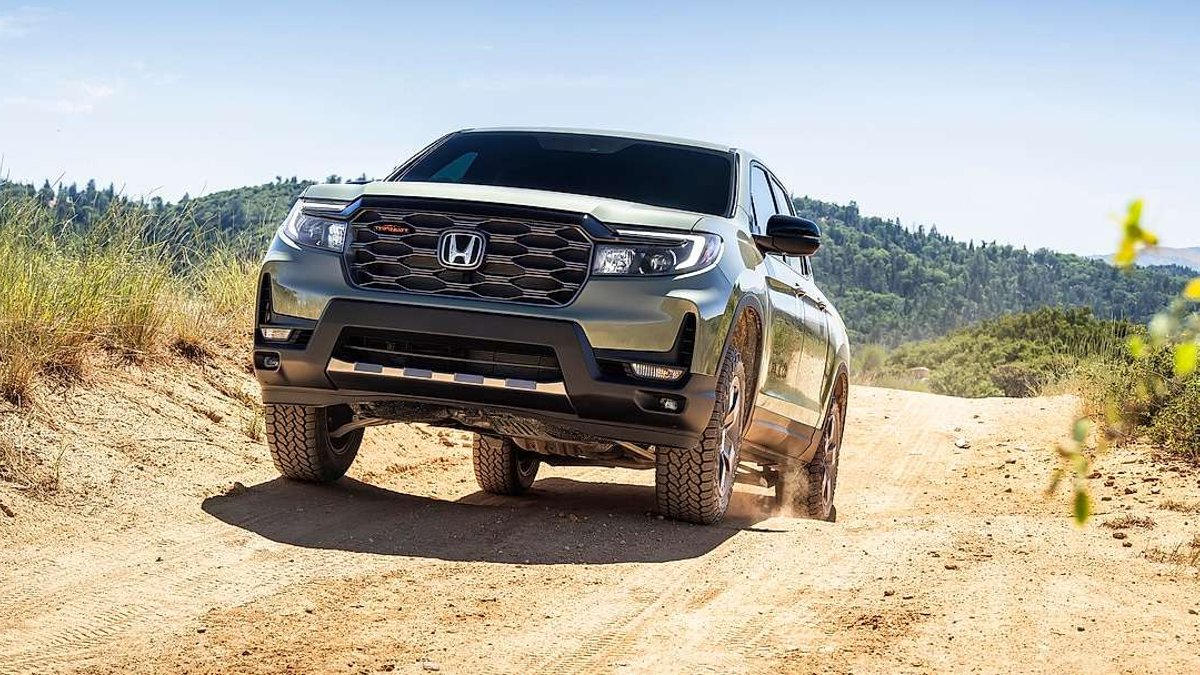
Honda Ridgeline owners now have a statistic that puts their midsize pickup ahead of a heavy-duty workhorse. A recent iSeeCars analysis assigns the Ridgeline a 13.7 percent chance of reaching 250,000 miles, edging out the Ford F-250 Super Duty which sits at 13.4 percent.
The analysis, performed by iSeeCars, draws on a large pool of real-world mileage records, enabling the Ridgeline to be benchmarked against a spectrum of both midsize and full-size pickups.
Ridgeline Beats Heavy-Duty Rival in Longevity Study
The study examined a sample of 12 pickups, ranking them by the probability of surviving past the quarter-million-mile mark. For context, the average probability for all pickups is 11.1 percent, while the overall vehicle average sits at 5.4 percent.
Placed tenth on the list, the Ridgeline’s odds are 1.2 times the pickup average. At the top, the Ram 3500 posts a 31.9 percent chance—nearly three times the baseline. The Toyota Tundra follows with 28.2 percent, and the GMC Sierra 3500HD offers 26.2 percent.
How the Numbers Stack Up
Further down the ranking, the Toyota Tacoma registers a 25 percent likelihood, while the GMC 2500HD provides 17.2 percent. The Ford F-250 Super Duty, designed for construction-site duty, records 13.4 percent, just above the Chevrolet Silverado 3500HD’s 11.7 percent.
Typical drivers put between 12,000 and 15,000 miles on a vehicle each year. At the upper end of that range, reaching 250,000 miles would require more than 16 years of continuous use, a horizon most owners will not personally experience.
Production of the current generation ends at the close of this year, meaning new purchasers will have fewer than a dozen model years to accumulate mileage before the line shuts down.
Impact on Ownership Decisions
When a vehicle that many critics label “wimpy” appears alongside rigs built for construction sites, potential owners receive a clear signal that engineering quality can offset structural differences. This perception shift is especially relevant for shoppers who prioritize daily practicality over extreme payload capacity.
Unibody Versus Body-on-Frame Perceptions
Consumer sentiment often pits unibody construction against the perceived robustness of body-on-frame designs. The data shows that a unibody truck can sit comfortably within a list that also contains models engineered for heavy-duty hauling and off-road excursions. This challenges the long-standing belief that only body-on-frame platforms survive extensive mileage.


Leave a Reply