
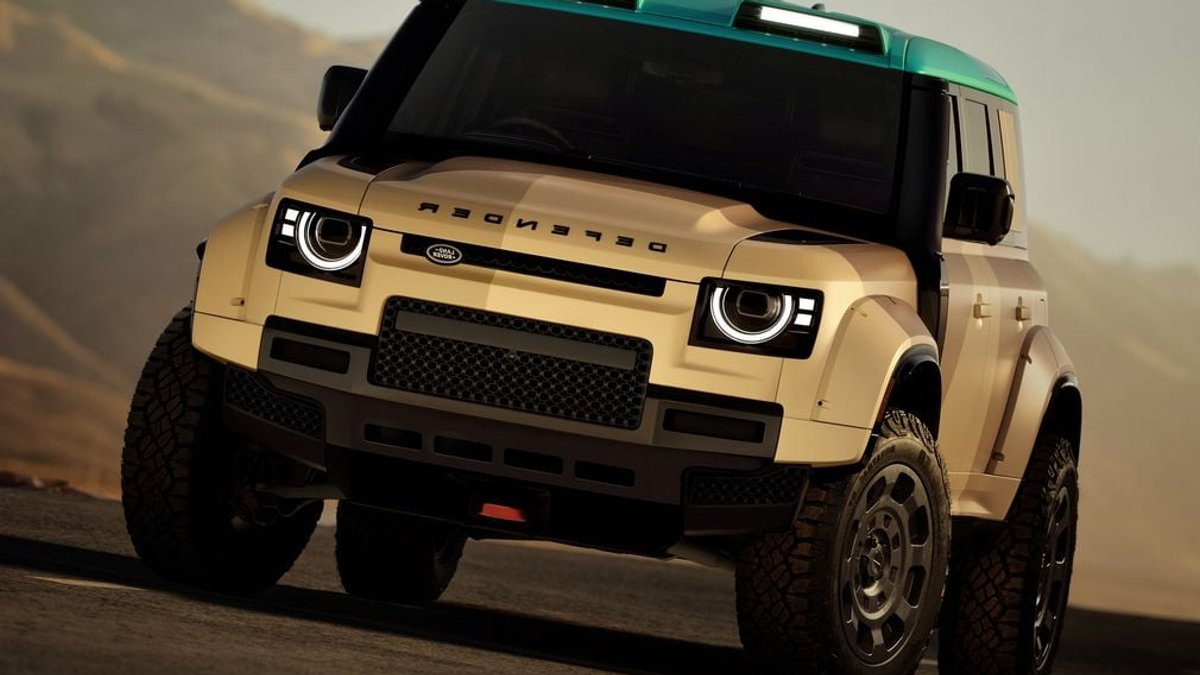
Land Rover is converting its 2026 Dakar Rally‑winning Defender D7X‑R into a street‑legal 4×4, unveiling the new Defender Dakar as a design preview at The Quail during Monterey Car Week.
From rally stages to public roads
The Defender Dakar retains the competition car’s core architecture, including the body shell, transmission and driveline first used on the Defender OCTA platform. Wider track, raised ride height and rally‑tuned suspension have been adapted for everyday use. The vehicle will sit on a 35‑inch tyre package fitted to forged 20‑inch wheels, while the suspension combines coil springs with Bilstein dampers derived from motorsport.
Two new drive modes—Dunes and Gravel—target loose‑surface conditions, and the Flight Mode system, originally created to smooth landings after jumps, also makes the transition to the road version. This system helps control the vehicle’s behavior when it encounters sudden changes in terrain.
Powertrain and performance
Power comes from the same BMW‑sourced 4.4‑litre twin‑turbo V8 that propelled the D7X‑R in the Dakar Rally. Because the road‑going Defender is not bound by race regulations, it can deliver the full 635 PS (about 467 kW) and 750 Nm of torque. Land Rover says the cooling system will be upgraded compared with the OCTA, though acceleration, fuel‑consumption and top‑speed figures have not yet been released.
Related: Murray S1 pays tribute to McLaren F1
The exterior has been reshaped around the off‑road hardware. A carbon‑fibre bonnet, twin raised air intakes and enlarged wheel arches with exposed rivets give the vehicle a distinctive look. Additional features include a fixed metal roof, roof‑mounted light pods, a front undershield and extra underbody protection, all of which differentiate it from a standard Defender.
The launch colour scheme mirrors the race‑winning livery, with a Dakar Sand body and Yanbu Turquoise roof. Alternate paints—Narvik Black and Alaska White—will be offered, and buyers can add a matte protective film if desired.
Inside, the Defender Dakar adopts a 2+2 seating arrangement with race‑style seats up front. Optional four‑point harnesses are available, and the rear storage area is sized to hold race helmets. Dedicated mounting points support a spare wheel and an air compressor, reflecting the vehicle’s off‑road focus.
Registrations of interest have opened, with reservations slated for early 2027. The brand has not disclosed production numbers or pricing, but it has indicated that the model will be a limited run. Further technical details are expected to be revealed at the 2027 Dakar Rally in Saudi Arabia.
Related: Global Leaders in EV Battery Production
The Dakar edition thrills off‑road fans.
While the Defender Dakar’s specs echo the competition car, its road‑legal status raises practical concerns about everyday usability. Historically, manufacturers have struggled to blend extreme off‑road capability with comfort and fuel efficiency for daily drivers. The new Defender appears to lean heavily toward performance, which may limit its appeal to a niche market of enthusiasts who value rally heritage over commuter practicality.
Overall, the Defender Dakar represents a direct translation of a rally‑winning machine into a consumer vehicle, preserving much of the original hardware while making necessary adjustments for road legality.


Leave a Reply