
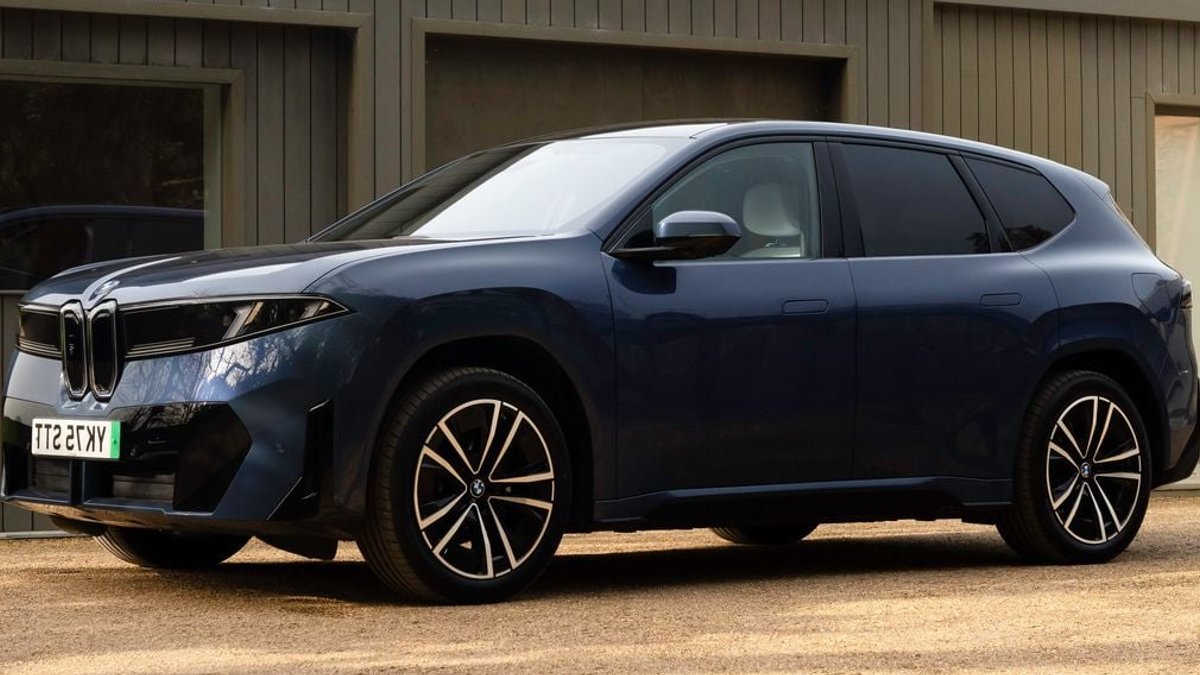
Australian motorists can now order the second‑generation 2026 BMW iX3, with the dual‑motor all‑wheel‑drive 50 xDrive already in delivery and the rear‑wheel‑drive iX3 40 slated for release later in the year.
Pricing and powertrain options
BMW lists the iX3 40 at $89,900 before on‑road costs, while the higher‑spec 50 xDrive starts at $109,900. Both models sit on the brand’s new “Neue Klasse” electric platform, but they differ in motor count and battery capacity. The 40 version uses a single rear‑mounted motor delivering 235 kW and 500 Nm of torque, pulling a 2,085 kg vehicle from 0‑100 km/h in 5.9 seconds. The 50 xDrive adds a second motor, raising output to 345 kW and 645 Nm, and pushes the heavier 2,285 kg SUV to 100 km/h in 4.9 seconds.
Battery packs also diverge. The 40 carries an 82.6 kWh net nickel‑manganese‑cobalt (NMC) pack, while the 50 xDrive is equipped with a 108.7 kWh net (113.4 kWh gross) pack that the company claims offers 20 percent higher energy density than its previous generation cells. WLTP‑based range figures stand at 635 km for the smaller battery and 805 km for the larger one. Energy consumption for the 40 is still to be announced, but the 50 xDrive is rated at 15.1‑18.8 kWh per 100 km.
Charging, dimensions and warranty
Both variants accept up to 22 kW AC charging, while DC fast‑charging tops out at 300 kW for the iX3 40 and 400 kW for the 50 xDrive. The vehicle measures 4,782 mm long, 1,895 mm wide, and 1,635 mm tall, with a 2,897 mm wheelbase. Cargo capacity is 520 L with the rear seats upright and expands to 1,750 L when folded.
BMW offers a five‑year unlimited‑kilometre warranty on the vehicle and an eight‑year, 160,000 km guarantee on the battery. Roadside assistance runs for three years. Service intervals are not fixed; instead, the iX3 uses condition‑based servicing that notifies owners when maintenance is needed. Pre‑paid service plans are available, ranging from $1,614 for a four‑year package to $6,615 for a six‑year plan that includes wear items such as brake pads.
Safety, equipment and options
The iX3 earned a five‑star rating under ANCAP’s 2026 safety protocol, scoring 71 percent for safe driving, 83 percent for crash avoidance, 86 percent for crash protection, and 95 percent for post‑crash performance. Standard safety gear includes adaptive cruise control with stop‑go, autonomous emergency braking, blind‑spot monitoring, lane‑keeping assistance, tyre‑pressure monitoring, and a suite of radars, cameras and ultrasonic sensors.
Related: Land Rover reduces Defender V8 power
Standard equipment across both trims features 20‑inch M Sport alloy wheels, a panoramic fixed‑glass roof with climate‑comfort glazing, a 43.3‑inch panoramic vision display, and a 17.9‑inch touchscreen infotainment system with wireless Apple CarPlay and Android Auto.
Color options include a standard Alpine White paint, with metallic finishes like Black Sapphire and Space Silver costing $2,000 extra. Frozen matte finishes such as Frozen Space Silver carry a $6,000 price tag, and bespoke BMW Individual paints can be ordered upon request.
In the broader context, the iX3’s launch mirrors the industry shift toward dedicated EV platforms, similar to Audi’s Q6 e‑tron and Mercedes‑Benz’s GLC EV. While the iX3 shares the X3’s overall shape, its underpinnings differ significantly, signalling the brand’s intent to separate its electric models from traditional internal‑combustion designs.
Production will continue into early 2027 with the arrival of the i3 sedan, another vehicle built on the Neue Klasse architecture and positioned as a 3 Series‑sized electric offering. The new design language introduced with the iX3 will eventually appear across the entire lineup, suggesting a gradual but steady transition toward a unified electric aesthetic.
Orders open now.


Leave a Reply