
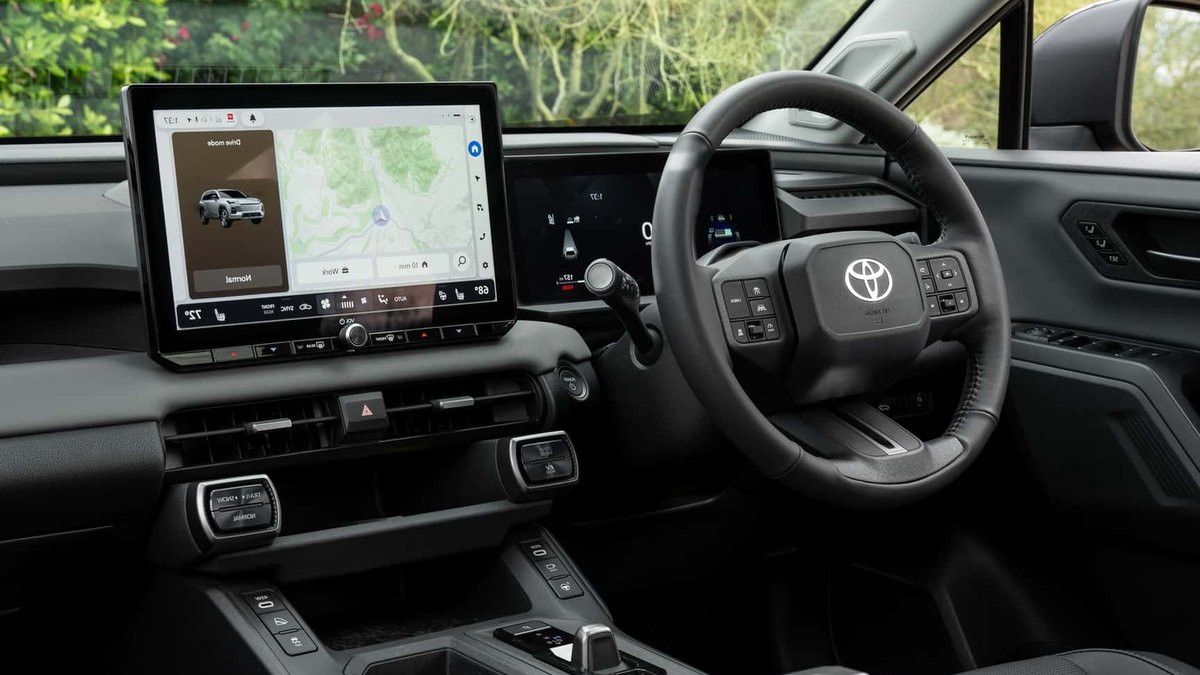
Toyota may restore some physical buttons to the sixth‑generation RAV4 if buyers push for them, according to the vehicle’s chief engineer.
Read next: Honda CR-V e:HEV X Brings Hybrid Affordability
New cabin design leaves many controls on a screen
The latest RAV4 debuted with a streamlined interior that relies heavily on a central touchscreen. Functions such as fan speed are now adjusted through the display, while temperature and volume still have dedicated knobs. Toyota’s design goal was to reduce the number of switches, a move that sparked “a lot of drama” inside the engineering team as they decided which controls to keep tactile.
Yoshinori Futonagane, who leads the RAV4 project, told Australia’s Drive that the company is still gauging customer reaction. He said the issue of reinstating physical switches “is an open item at the moment.” When asked whether the automaker would bring back more buttons, Futonagane replied, “If necessary, yes, we will.”
Internal meetings have been filled with data from test drives, focus groups, and online forums. The team reviews each comment to decide whether a button should return or stay digital.
Consumer demand for physical controls is growing
Recent years have seen a resurgence of calls for tangible buttons in cars. Some manufacturers, like Volkswagen, have faced criticism for relying on touch‑sensitive knobs. In China, buyers have explicitly expressed a preference for knobs and switches, prompting Toyota to begin adding physical controls to other models sold there.
Other brands are responding in different ways. Kia and Audi have pledged to retain traditional buttons, while Mazda’s new CX‑5 has removed nearly all cabin controls, steering drivers toward voice commands and steering‑wheel inputs.
Related: Hyundai’s Spiciest EV Gets Massive Price Cut
Motor1 noted that while eliminating buttons can cut costs, automakers remain aware of how sensitive drivers are to such changes. The RAV4’s lack of many physical controls could become a selling point—or a stumbling block—depending on how strongly customers voice their preferences.
From a broader perspective, the push‑and‑pull between digital interfaces and tactile feedback mirrors earlier shifts in the industry. When navigation screens first appeared, some drivers complained about the loss of dedicated knobs, leading manufacturers to re‑introduce them in later models. The current RAV4 situation could follow a similar pattern, with the company adjusting its strategy based on real‑world feedback rather than sticking rigidly to a button‑free vision.
At present, Toyota has not announced a timeline for any potential revisions. The company’s approach appears to be to monitor market response closely before committing to design changes.
If a significant portion of RAV4 owners request more physical controls, the automaker says it is prepared to adapt.
For now, buyers of the sixth‑generation RAV4 will need to use the touchscreen for many functions.
Future updates may bring back some of the familiar knobs and buttons many drivers still rely on.


Leave a Reply