
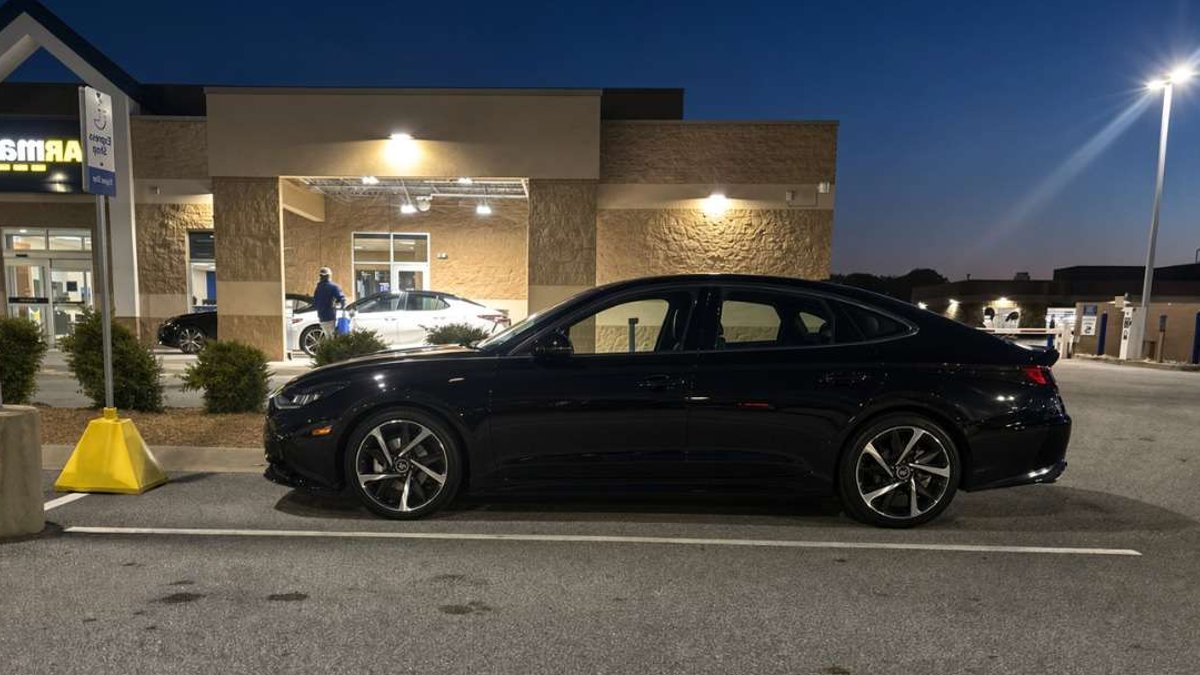
When Wakika Kiki Brown booked a service appointment for her 2023 Hyundai Sonata with just 50,000 miles, she expected a routine fix for a recall. Instead, Hyundai informed her that the automaker would repurchase the vehicle, turning a short-term repair into a full buyback.
Recall 286 and the hidden fuel-tank hazard
Recall 286, identified as NHTSA campaign 25V796, affects 85,043 Sonata models built between 2020 and 2023 that use the 1.6-liter turbocharged engine. The defect stems from a purge-control-system check valve that can wear out and allow turbo-charged air to flow backward into the fuel tank.
Over time, the excess pressure may deform the tank and cause a leak, raising the risk of a fire if fuel contacts an ignition source.
Hyundai’s filing lists several warning signs: a popping noise from the rear, an illuminated malfunction indicator, a no-start condition, or a fuel odor. As of the November 2025 filing, seven fuel-tank leak reports had been logged across the United States and Canada, none resulting in crashes, injuries or fatalities.
Official remedy versus buyback offers
The automaker’s standard remedy calls for dealers to inspect or replace the faulty valve, examine the fuel tank and surrounding components, and update the engine-control unit software with new diagnostics. All work is to be performed at no cost to the owner, and the replacement valve uses a redesigned part intended to resist wear.
Brown’s experience diverges from that protocol. She says the dealership told her the vehicle would be held for four to seven days, then called her the next day to say Hyundai declined the repair and would buy the car back. Her post does not detail what, if any, damage was discovered during the inspection, and no documentation has been released to confirm the reason for the buyback.
Hyundai’s own investigation sheds light on why the issue escalated. In September 2025 the North American Safety Office reviewed field data from an earlier emissions-related campaign and identified three new fuel-leak allegations.
Subsequent testing in Virginia confirmed a leak linked to contact between the fuel-tank heat shield and the exhaust system. Engineers then used 3D scans of under-body components, and replication tests validated the leak scenario, prompting the safety recall in November 2025.
From a broader perspective, this pattern mirrors past Sonata problems where a seemingly minor component failure—such as a valve or sensor—uncovered deeper structural concerns. Those earlier incidents also led manufacturers to broaden repair scopes beyond the original part, reinforcing the idea that thorough inspections can reveal hidden risks.
Owners should act promptly.
Inspection Scope and Under-Body Findings
Dealers performing the recall are instructed to inspect the fuel tank and surrounding components, replace the purge-control-system check valve if necessary, and update the ECU software with diagnostics that monitor internal fuel-tank pressure. These actions are to be performed at no cost to the owner.


Leave a Reply