
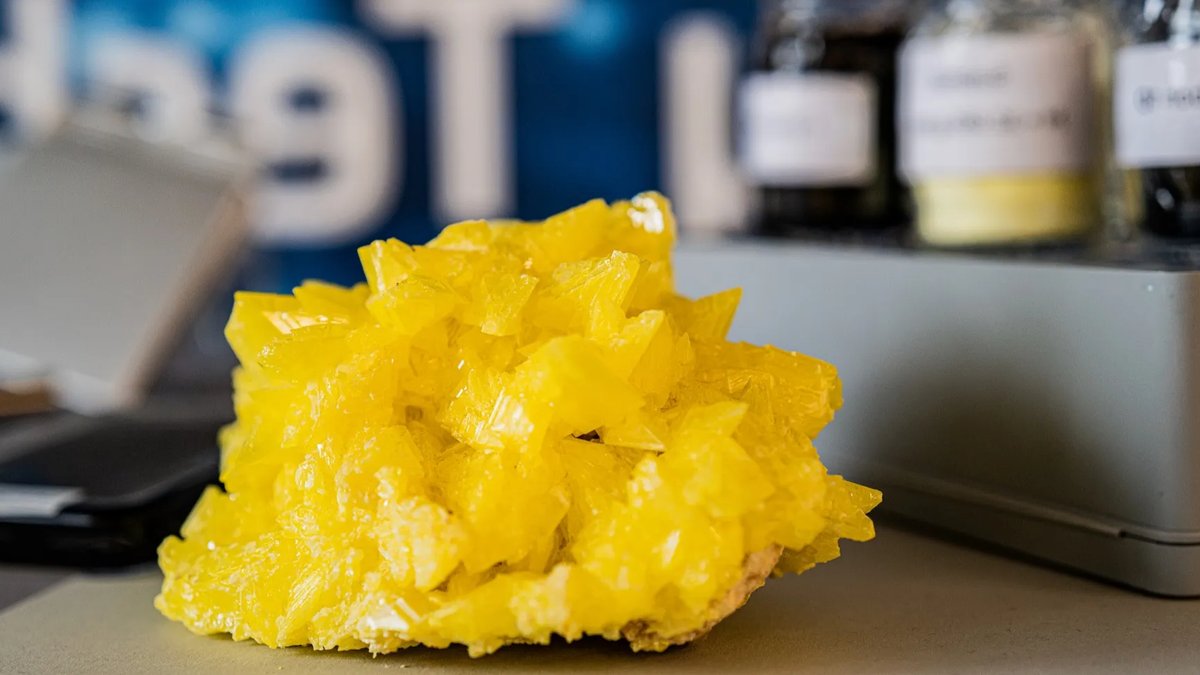
A German startup, Theion, believes it has developed a recipe for electric vehicle battery cells that are cheaper, more energy dense, and less problematic for the environment than current lithium-ion cells. Theion announced Thursday that it is close to completing a 15 million euro Series A round to develop its sulfur-crystal battery chemistry. This chemistry is based on proprietary anode technology that Theion hopes will extend battery life, one of the main obstacles to sulfur-based chemistries.
Theion’s goal is to achieve an energy density of 1,000 Wh/kg, which is about triple that of leading-edge nickel manganese cobalt cells today. Such energy density would allow for much lighter cells without sacrificing range, or increased range from the same volume. Theion claims it can achieve this without using nickel or cobalt, addressing environmental and human-rights concerns associated with the mining of those metals.
Theion’s cells could have a one-third lower carbon footprint—and cost—compared to conventional cells. This is because sulfur is the 16th most abundant element on Earth, and costs much less than the raw materials of NMC cells. Theion’s sulfur-crystal battery chemistry has the potential to significantly impact the electric vehicle industry.
However, as Theion emphasizes, longevity in cycle life will be the challenge for sulfur-crystal batteries. The startup believes its batteries need to maintain performance over 1,000 charge/discharge cycles to be commercially viable. Theion aims to build up to this target after initial testing of 500 Wh/kg cells at 500 cycles, before starting production.
Research into lithium-sulfur batteries for EVs goes back at least a decade, and we’ve seen impressive claims about their ability to boost EV range before. Stellantis has even partnered with not one, but two startups—Lyten and Zeta Energy—that aim to commercialize the tech, perhaps by the end of the decade. But it remains to be seen if any of these efforts—Theion’s included—will overcome the hurdles and get sulfur batteries into production EVs.
In comparison to other battery technologies, Theion’s sulfur-crystal battery chemistry has the potential to offer significant advantages. For example, the use of sulfur instead of nickel or cobalt could reduce the environmental impact of battery production. Additionally, the potential for increased energy density could lead to longer-range electric vehicles, making them more appealing to consumers, which could lead to increased adoption of hybrid systems in the industry.
Theion’s announcement comes as the electric vehicle industry continues to evolve and grow. As companies like Tesla and Stellantis invest in new battery technologies, the potential for innovation and advancement is significant. They are working to improve the range and efficiency of electric vehicles.
While Theion’s sulfur-crystal battery chemistry shows promise, it’s still in the early stages of development. The company must overcome significant technical challenges before its batteries can be used in production vehicles. However, if successful, Theion’s technology could have a major impact on the electric vehicle industry, enabling the production of longer-range, more efficient vehicles that are better for the environment.
Theion’s efforts are part of a broader trend towards the development of more sustainable and efficient battery technologies. As the demand for electric vehicles continues to grow, the need for innovative battery solutions will only increase. The development of range extenders is also key in this context.
They are working to address the challenges associated with sulfur-based chemistries.


Leave a Reply